V.I.B.E. Visualized Infrastructure & Behavioral Engine
Modern cities often struggle with urban blight – the gradual visible decline of neighborhoods that leads to lower property values, increased crime, and reduced quality of life. Traditional municipal management relies on historical data (like 311 requests or code violations), which creates a “lag-time” problem: city officials only react after a problem has become visible and residents have already grown frustrated.
V.I.B.E. (Visualized Infrastructure & Behavioral Engine) is an AI-driven “Digital Twin” of Montgomery’s urban health. It bridges the gap between official city data and real-time behavioral sentiment to create a predictive model for urban maintenance.
By synchronizing Mapbox-powered geospatial intelligence with hyper-local data scraping (Bright Data), V.I.B.E. identifies high-risk areas where citizen frustration is rising faster than municipal responses, allowing for preemptive intervention.
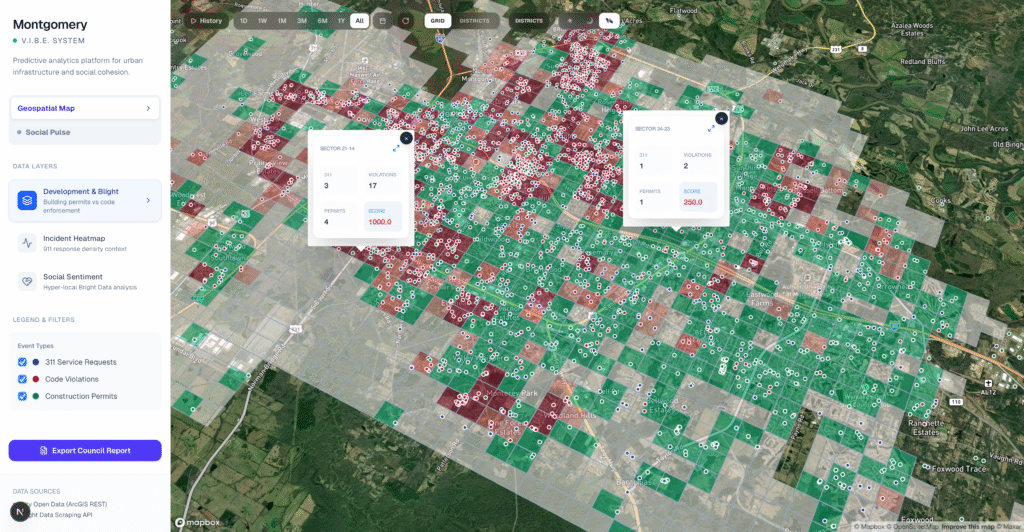
V.I.B.E. Map Analysis Types
1. Blight Risk Heatmap (UBS)
The Unified Blight Score (UBS) map is a predictive tool that color-codes city districts based on their probability of physical decline.
- How it works: It correlates 311 utility requests, building permits, and code violations with historical patterns.
- Value: Allows city officials to see “invisible” neighborhood degradation 30 days before it becomes a critical issue, enabling prioritized maintenance and inspections.
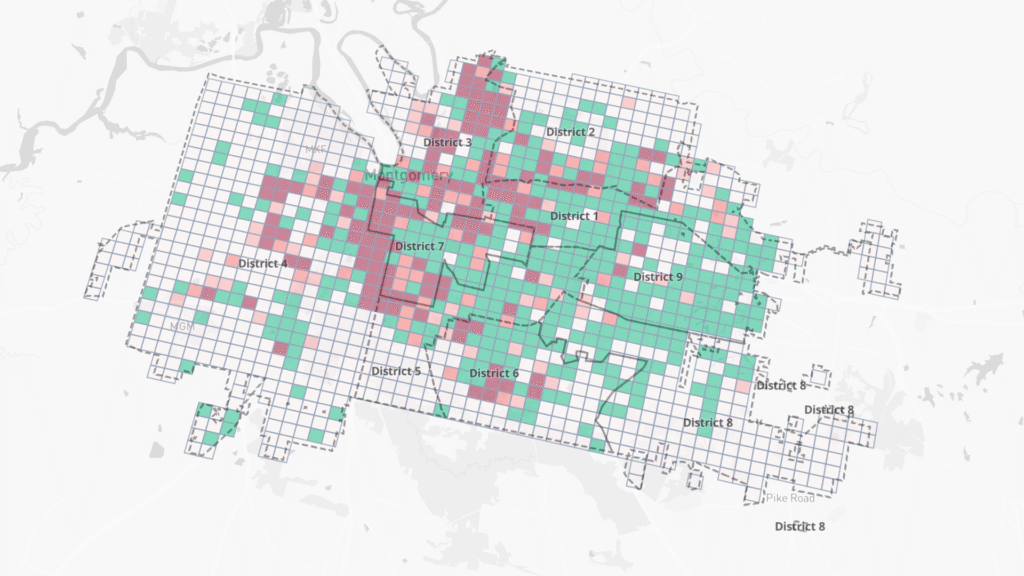
2. Sentiment Density & Hotspots
This layer visualizes the “social heartbeat” of the city by mapping real-time public discourse.
- How it works: It uses AI-driven sentiment analysis to cluster feedback from social media, news, and community forums into geographic hotspots.
- Value: Identifies localized zones of high resident frustration or satisfaction, providing a “behavioral pulse” that traditional statistics often miss.
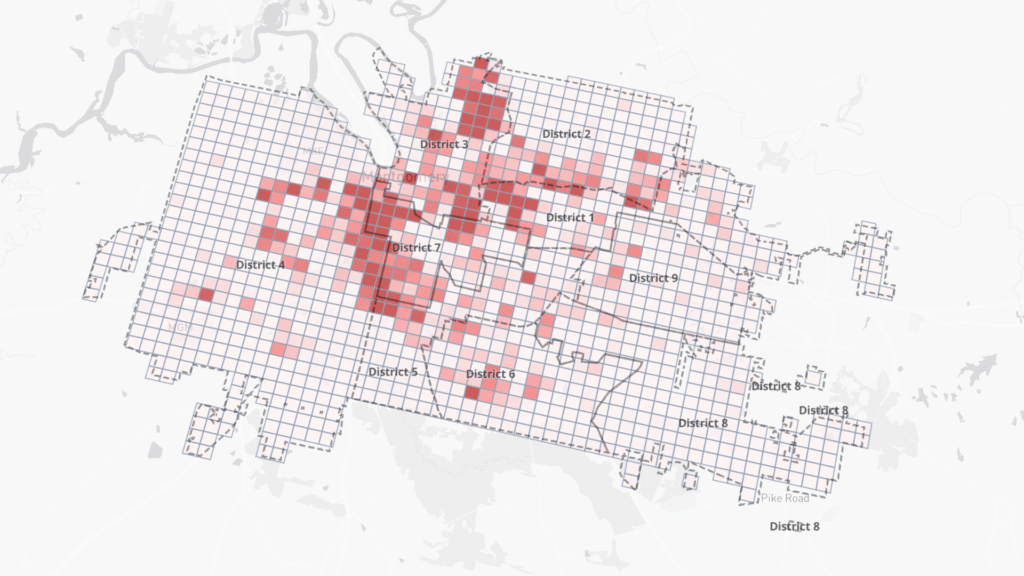
3. Sentiment Gap Analysis (Early Warning System)
The most innovative layer of the system, identifying the rift between resident experience and official reporting.
- How it works: It automatically highlights areas where public sentiment is dropping sharply while official 311 reporting remains low.
- Value: These “Sentiment Gaps” act as early warning signs for hidden crises, allowing the city to intervene before a situation escalates and residents lose trust in municipal services.
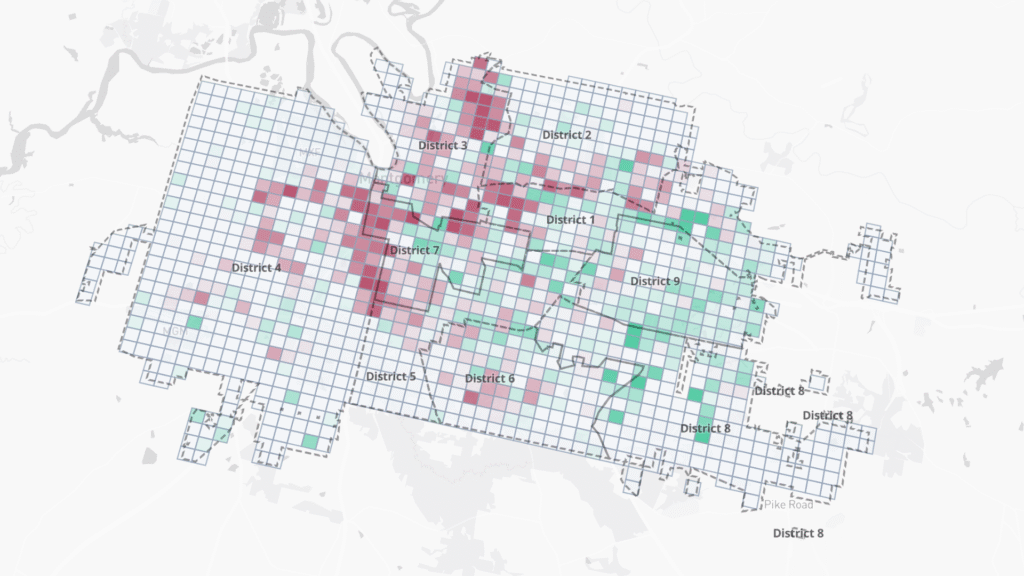
Key Innovations
1. Unified Blight Score (UBS)
The core of our platform is the UBS. Unlike a static index, the UBS is a dynamic predictive model that forecasts neighborhood degradation 30 days in advance. It calculates risk by blending:
Behavioral Indicators: Real-time sentiment trends from social platforms and news.
Physical Indicators: Building permits, code violations, and 311 utility logs.
2. Geospatial Intelligence
A high-performance 3D interactive map that visualizes the “heartbeat” of the city. Officials can toggle between layers of property data, crime stats, and live sentiment pulses, seeing exactly where the physical and social health of a district diverge.
3. Social Pulse Behavioral Engine
Using Bright Data’s Web Unlocker, V.I.B.E. scrapes hyper-local discourse from Reddit and regional news without being blocked. We then apply NLTK-driven sentiment analysis to translate text into actionable data points on a map.