
CurrentSky · Edge AI
The autonomous AI platform for computer vision & edge ML
Runs entirely on-device — no cloud, no network, even when disconnected from power.
The story
Built in 48 hoursA weekend sprint that shipped
Some builds take months. VisionBox took a weekend — and it’s one of the most ambitious things we’ve ever shipped at CurrentSky.
The clock started at a hackathon: forty-eight hours to take an idea — a small box that could see, think and act entirely on its own — and turn it into real, working hardware. No shortcuts, no pre-built kit to lean on. Just an empty bench, a pile of components, and a deadline.
By the time it ran out, VisionBox was whole. We had 3D-printed its enclosure, given it a Raspberry Pi brain, a camera, a front display, glowing LED strips and its own battery — and taught it to run neural networks on-device, all driven over the local network. Every problem that surfaced got answered on the spot, in hardware, against the clock.
VisionBox was far too finished to leave on a shelf — not a weekend demo, but a device that genuinely works, end to end. So this is where it lives now.
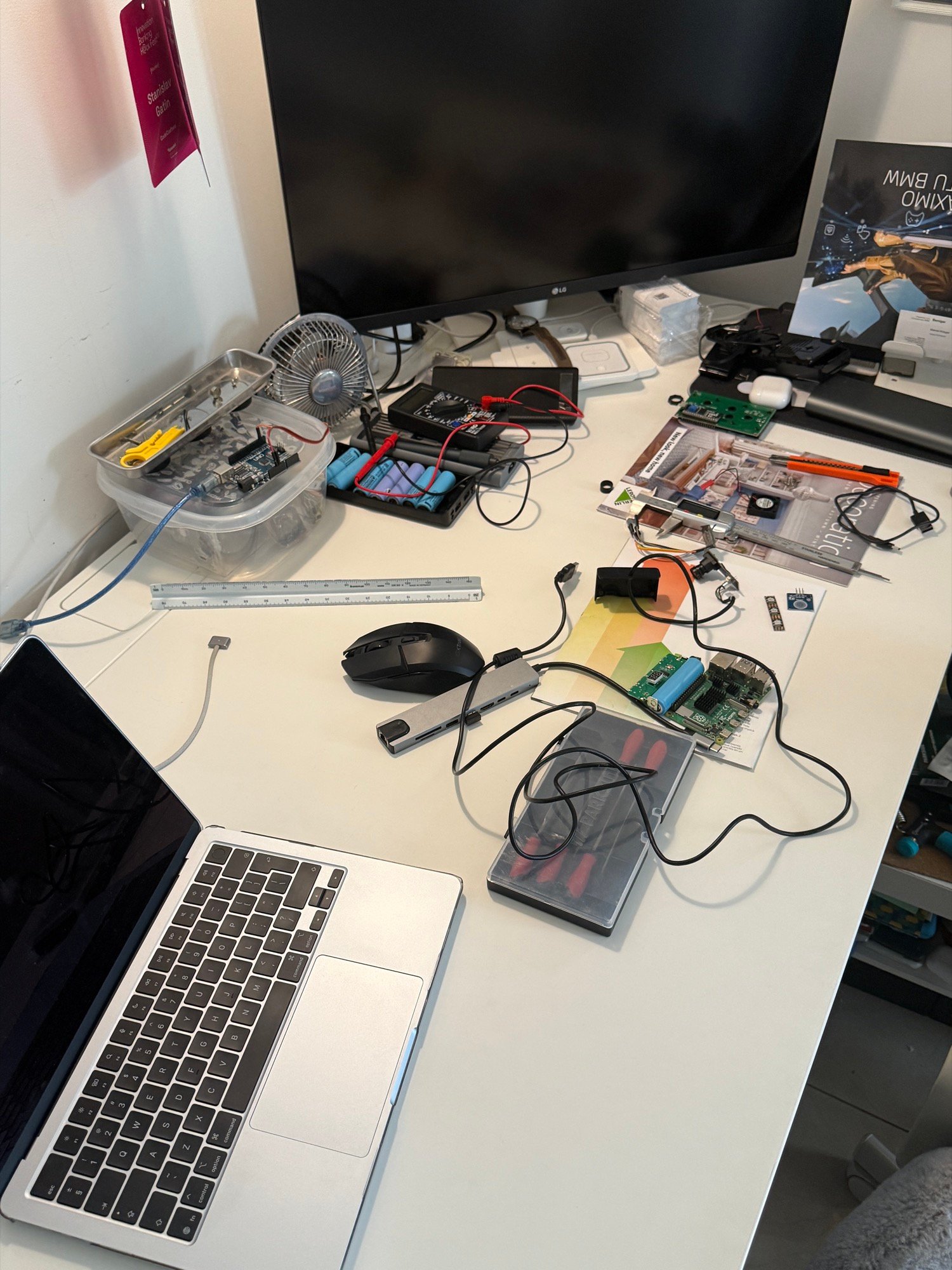
Development in progress.
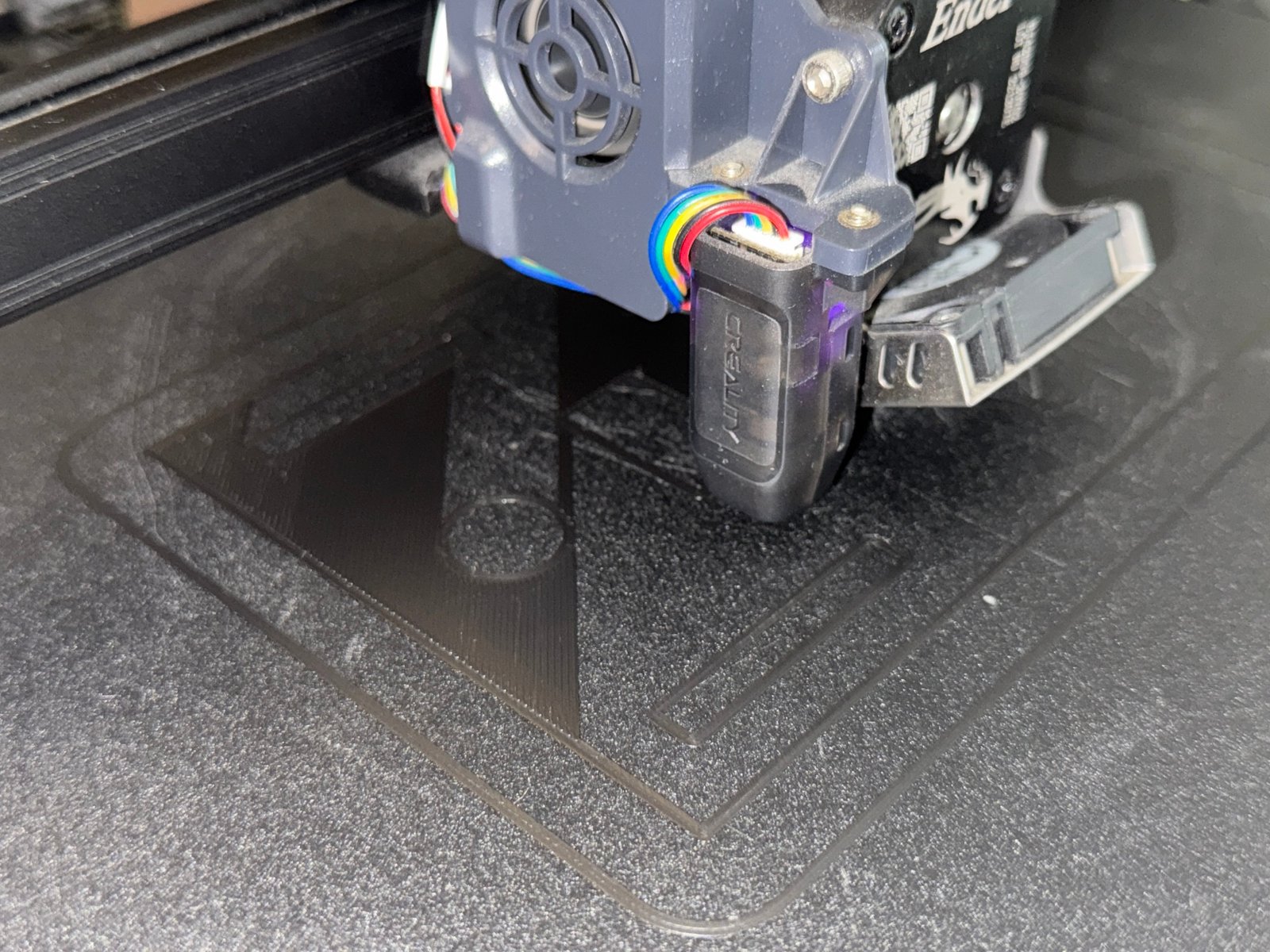
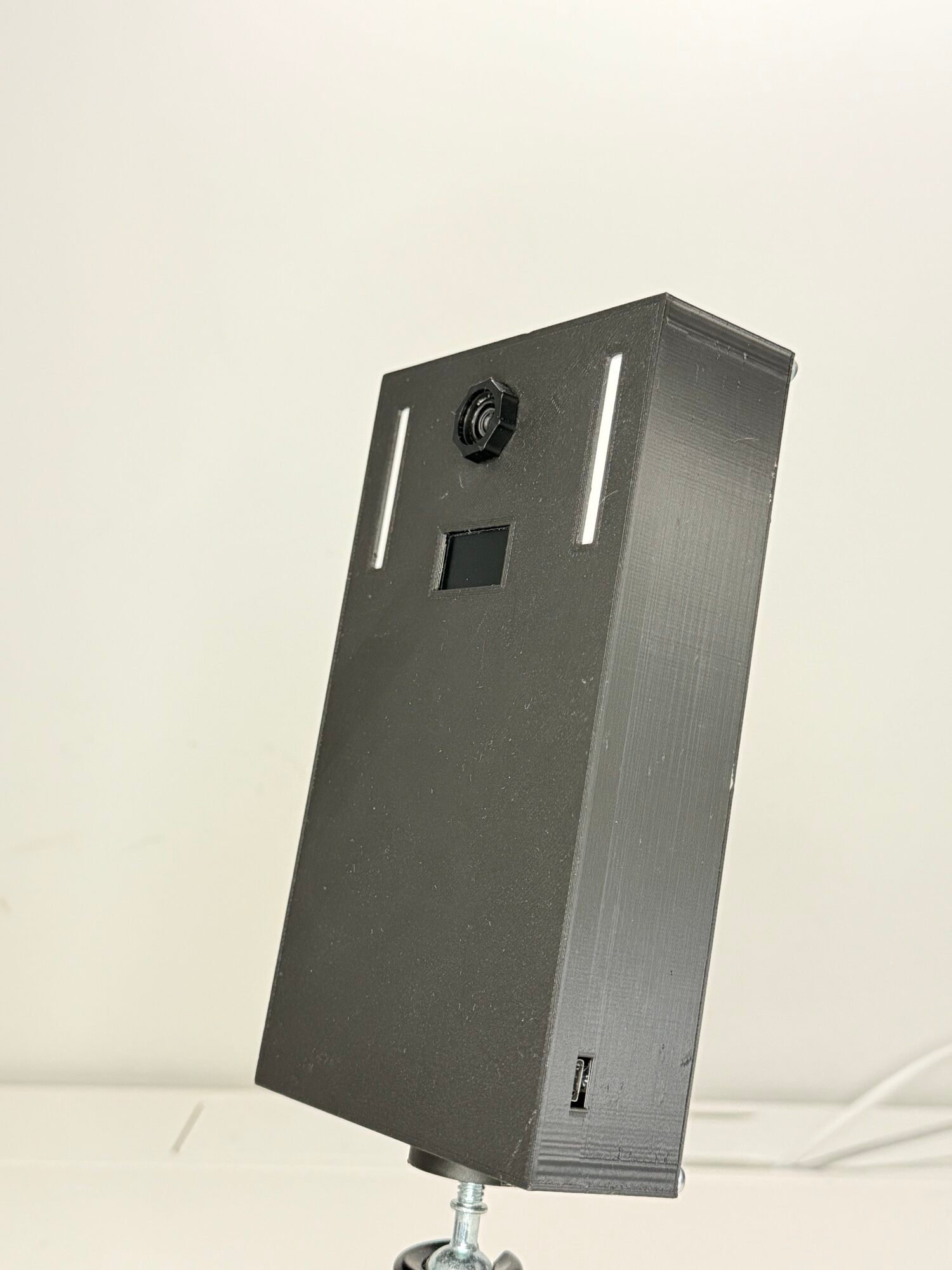
The enclosure, 3D-printed in-house in PLA.
What it is
Vision that runs anywhere
VisionBox is a versatile, autonomous platform for real-world machine learning. Born from a project for biometric payment via facial recognition and smiles, it evolved into a multi-functional device that analyzes data across countless scenarios.
With a built-in camera and neural-network processing, it runs entirely on edge computing — all data processed locally, no internet or external servers, working even when disconnected from power or network.
On-Device ML Deployment ✦ Security Monitoring ✦ Object Recognition ✦ Vehicle Monitoring ✦ Facial Recognition
On-Device ML Deployment ✦ Security Monitoring ✦ Object Recognition ✦ Vehicle Monitoring ✦ Facial Recognition
On-Device ML Deployment ✦ Security Monitoring ✦ Object Recognition ✦ Vehicle Monitoring ✦ Facial Recognition
The hardware
What’s inside the box
A Raspberry Pi 4 brain drives a camera, a display, addressable LED strips and its own battery — all controlled over the local network, running simple neural networks fully on-device.
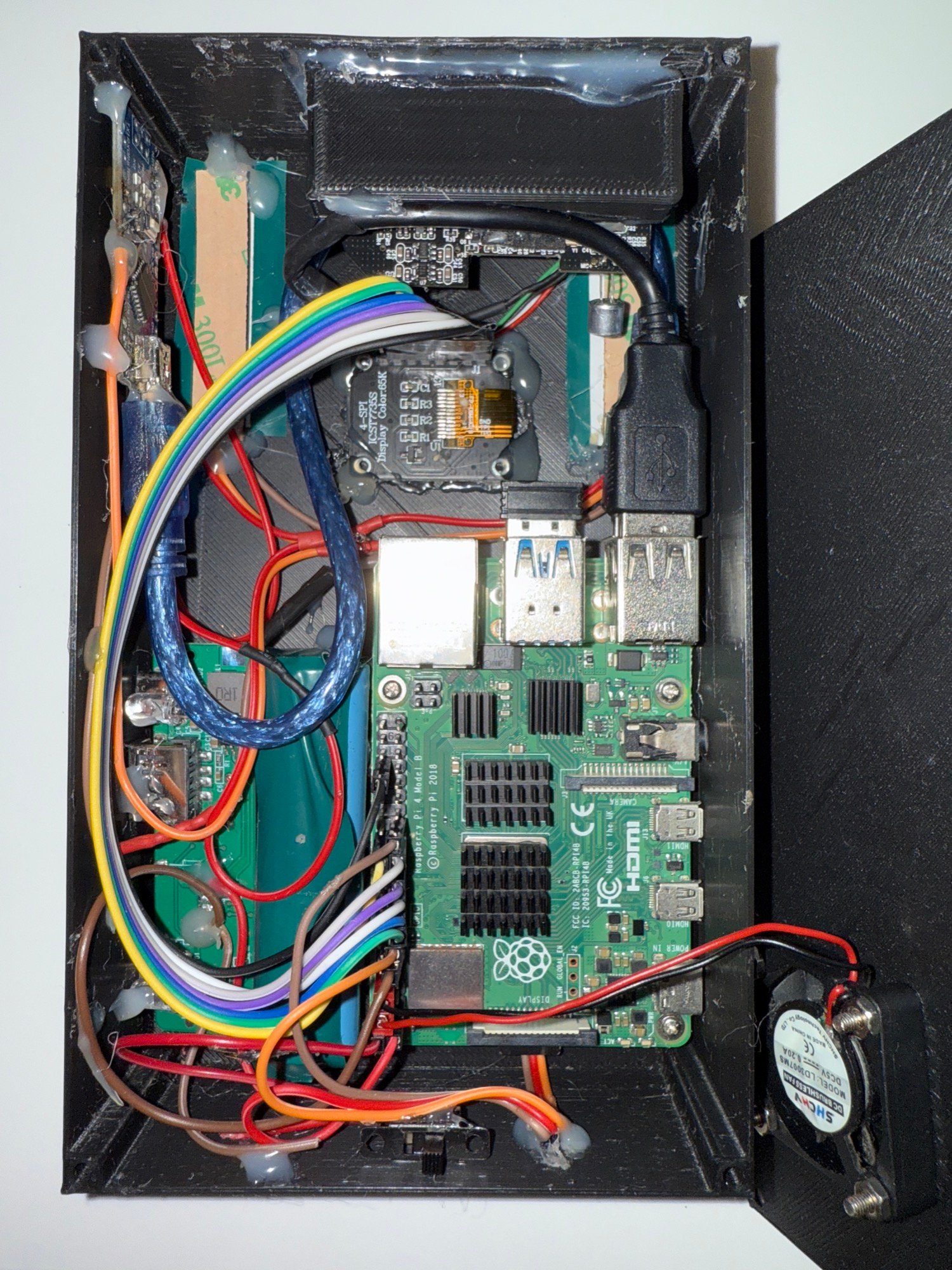
Inside the box — Raspberry Pi 4, with the rest of the components.
🧠 Raspberry Pi 4
The brain — runs the vision models, the interface and the local-network control server.
📷 Camera
An on-board camera feeds the neural networks — facial recognition, detection and more.
👆 Hidden touch button
A capacitive button concealed in the case controls the whole device with a single tap.
💡 WS2812 LED bars
Addressable RGB strips glow through the front panel for status and feedback.
🖥️ Front display
A small SPI screen shows live status and information on the face of the box.
🔋 Internal battery
An on-board pack keeps it running untethered — even disconnected from power.
🌐 Local-network control
Operated entirely over the LAN — no cloud, no internet dependency.
🌀 Active cooling
A 5 V fan keeps the Pi cool under sustained inference loads.
Engineering
One data wire, two voltages
The WS2812 LED strips expect a 5 V data signal, but the Raspberry Pi’s GPIO speaks 3.3 V logic — and there was no logic level shifter (a 74AHCT125) on the bench to bridge them. With the clock running, we solved it another way: an Arduino sits between the two, taking commands from the Pi and driving the strips at its native 5 V. A pragmatic, hackathon-grade fix — and rock-solid in practice.
Under the hood
Core features
Autonomous Edge AI
Runs neural networks fully on-device — no cloud in the loop.
Local Data Processing
Everything is computed locally; nothing leaves the box.
Multi-Purpose Camera
One high-resolution sensor, many jobs.
On-Device Training
Deploy, train, and test models right on the hardware.
Modular Hardware
Add sensors and expand capability as needs grow.
Secure Data Handling
Offline processing keeps data private by design.
Low-Power Consumption
Efficient edge compute — runs even off the grid.
Usage
One device, many jobs
Biometric payments
Pay with a smile: captures a face, analyzes features locally, and confirms the transaction with no cloud — fast, contactless, private.
Retail analytics
Counts people, tracks movement and engagement to optimize store layouts and marketing decisions.
Security monitoring
Watches live feeds for intrusions and unusual behavior with on-device ML — no external servers, full privacy.
Smart spaces
Tracks occupancy and room usage to automate lighting, HVAC, and cut energy consumption.
Traffic & parking
Counts cars, recognizes plates, and tracks movement in real time for traffic and parking management.
Crowd & event analysis
Detects people and density to improve crowd safety and planning at events — no cloud dependency.
AI research & education
Deploy, train, and test ML models on-device with TensorFlow or PyTorch — a hands-on, offline AI lab.
The device
The finished device
Two days from an empty bench to a working device: a 3D-printed enclosure, a Raspberry Pi brain, an on-board camera, LED status bars and its own battery — running TensorFlow and PyTorch models fully on-device, no cloud dependency.
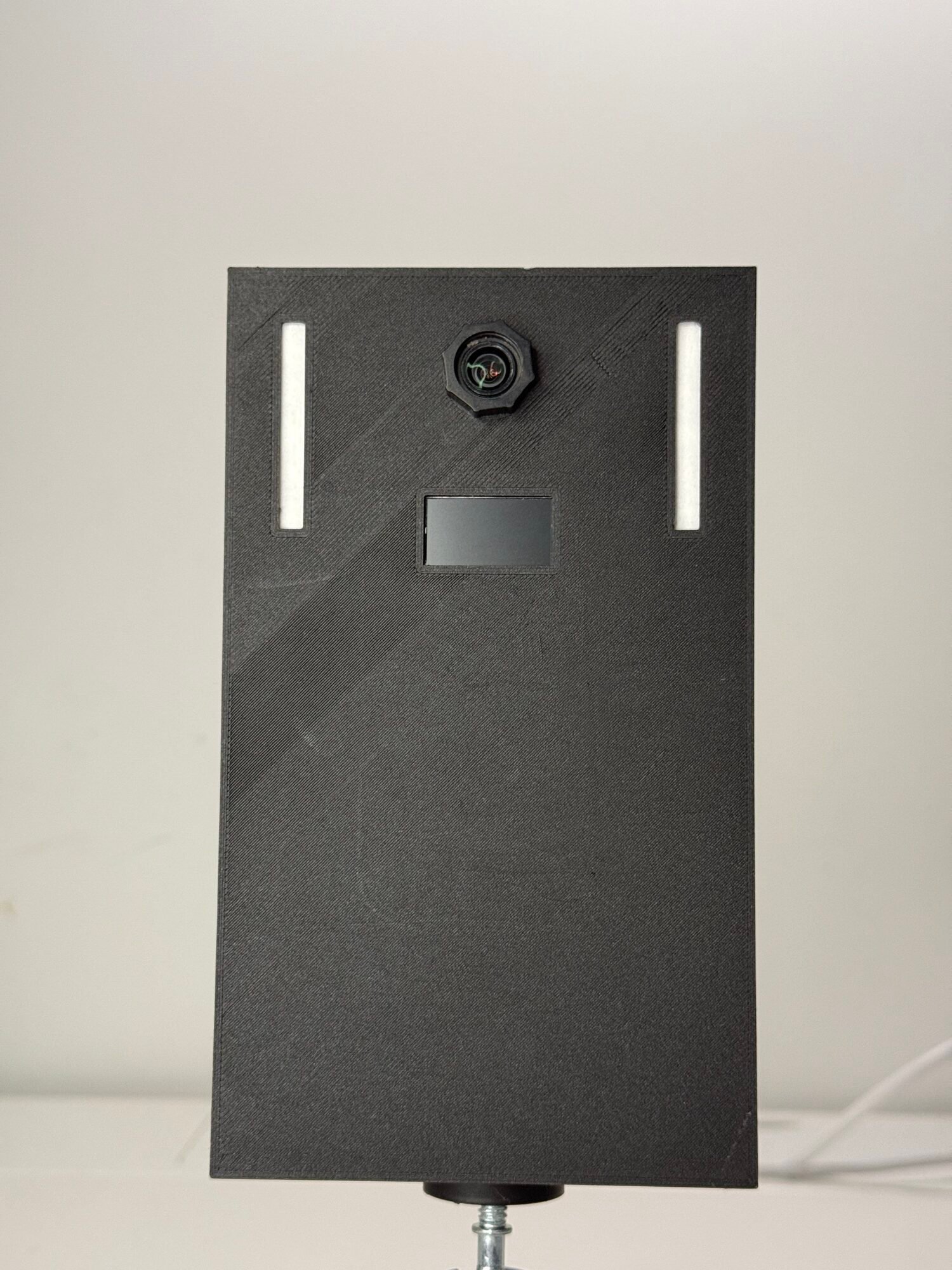
Edge Computing ✦ TensorFlow & PyTorch ✦ Offline & Private ✦ Modular Hardware ✦ Real-Time Analytics
Edge Computing ✦ TensorFlow & PyTorch ✦ Offline & Private ✦ Modular Hardware ✦ Real-Time Analytics
Edge Computing ✦ TensorFlow & PyTorch ✦ Offline & Private ✦ Modular Hardware ✦ Real-Time Analytics
Build vision at the edge
Want to deploy VisionBox or build on the platform? Let’s talk.